

You might not realize that the right plastering technique can greatly enhance both the visual appeal and acoustics of your home theater. By choosing methods like Sgraffito or integrating acoustical plaster, you can transform a standard space into an enchanting cinematic experience. The options are vast, and each choice can dramatically affect the atmosphere of your theater. Understanding how to utilize these techniques effectively could lead you to create a space that's not only stylish but also functionally superior. What specific elements are you considering to elevate your home theater?
Essential Plastering Materials
When you're setting up a home theater, selecting the right plastering materials is essential for both aesthetics and functionality. The choice of plaster types can greatly affect your space's look and sound quality.
For interior walls, consider gypsum plaster for its smooth finish and quick setting. If you're focusing on sustainability, clay plaster is eco-friendly and offers excellent thermal properties. Additionally, clay plaster provides natural moisture-regulating benefits and is non-toxic, making it a healthier choice for indoor spaces.
To enhance soundproofing, incorporating specialized soundproofing materials is key. Acoustical plaster, designed for sound absorption, can be applied directly onto existing walls, providing an effective solution. Sound waves are energy that travels through air, water, and solids, and understanding this concept will help you appreciate the importance of soundproofing in your home theater design.
You might also want to use mass loaded vinyl (MLV) beneath your plaster to further dampen noise. Additionally, think about using resilient channels to reduce sound transmission through your walls.
For added texture, you can mix veneer plaster with a joint compound and sand in a 1:1:1 ratio. This not only improves aesthetics but can also enhance durability.
Make sure you select high-quality materials that not only meet your design vision but also contribute to the long-term performance of your home theater. With the right plastering materials, you'll create a visually appealing and acoustically optimized environment.
Tools for Effective Plastering
To achieve a flawless plaster finish in your home theater, having the right tools at your disposal is essential.
Start with a good selection of trowels; they come in various styles to suit different jobs. A metal trowel with a 1/32 blade thickness is ideal for smooth applications. Pair it with a hawk for easy plaster handling and a float to guarantee a polished surface. Additionally, proper sanding techniques can help ensure that the surface is smooth before applying the finish coat.
Don't forget other handy tools like a level to assure straight lines and a tape measure for accurate dimensions.
Automated plaster mixers can save you time and enhance the consistency of your mix. If you're planning on adding decorative elements, molds are invaluable for achieving precise designs. When hiring a contractor, verify that they have adequate insurance to protect your project from unforeseen issues.
Artistic Plastering Techniques
With the right tools in hand, you're ready to explore artistic plastering techniques that can elevate your home theater's aesthetic. These techniques not only enhance the visual appeal but also introduce unique plaster texture techniques that set your space apart. Here are some methods to evaluate:
| Technique | Description | Application Tips |
|---|---|---|
| Layered Casting | Pour multiple layers into molds for depth. | Use silicone molds for flexibility. |
| Sgraffito | Scratch designs into colored plaster layers. | Practice on smaller pieces first. |
| Fresco | Paint on wet plaster for integrated colors. | Work quickly to preserve moisture. |
| Plaster Carving | Carve hardened plaster for intricate designs. | Start with simple shapes, then advance. |
Incorporating decorative plaster finishes can transform your home theater into a work of art. Techniques like stippling and trowel application create textures that mimic stone or other materials. Minimalism in art emphasizes simplicity and clarity, which can inspire your design choices. Experimenting with pigment mixing can add highlights that complement your theater's theme. By utilizing these artistic plastering techniques, you'll create a visually stunning space that reflects your personal style. Choosing the right plaster type, such as breathable lime plaster, is essential for achieving a durable and aesthetically pleasing finish.
Modern Plastering Styles
Modern plastering styles have evolved greatly, offering a blend of aesthetic appeal and practical functionality for today's homes. One highly sought-after option is polished plaster. Its luxurious, reflective surface adds depth and enhances any interior design. You can customize it to fit various aesthetics, making it perfect for both residential and commercial spaces.
Another popular choice is concrete look plaster, which mimics the industrial appeal of concrete. This style complements sleek, urban designs and provides a unique finish that balances elegance with minimalism. It's versatile enough for any modern interior.
Microcement trends are also gaining attention with their minimalist, seamless finishes. This thin-layered coating not only offers durability but also adds a touch of urban chic to your space.
Utilizing modern plaster techniques allows for clean lines and smooth surfaces, enhancing the overall look of your home theater.
With the integration of advanced technology, you can achieve efficient applications and flexibility in your design choices. Whether you're opting for modern plaster finishes or textured plaster surfaces, these styles can transform your space into something truly unique and visually stunning.
For outdoor applications, choosing the right plaster type is crucial, and options such as cement plaster offer exceptional strength and durability under external pressures.
Traditional Plastering Methods
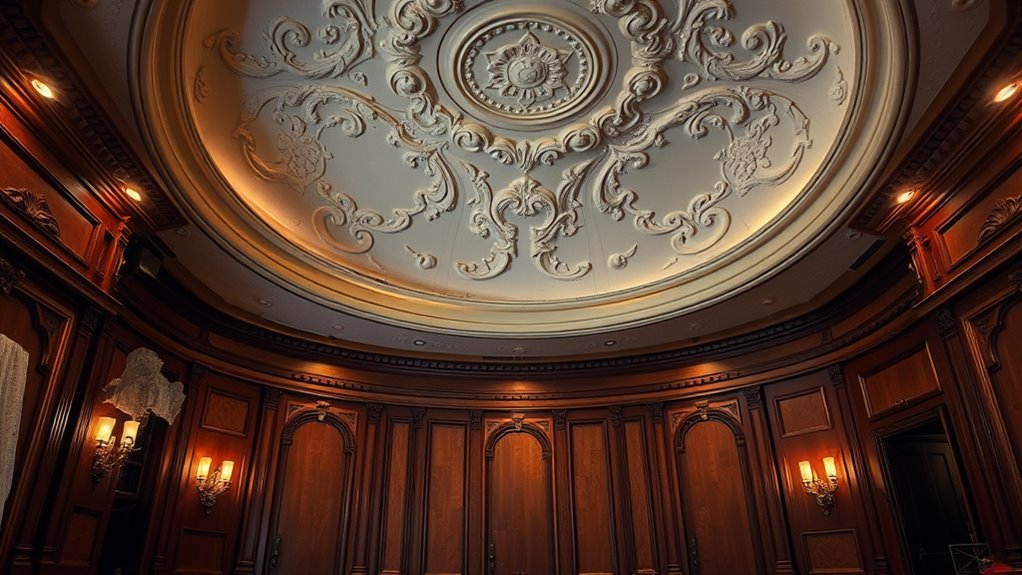
While contemporary plastering styles offer sleek finishes and modern aesthetics, traditional plastering methods bring a rich history and unique character to your home. One of the most notable techniques is lime plastering, which combines quicklime, water, horsehair, and sand. This mixture is renowned for its durability and workability, making it a favorite among skilled artisans.
In historical plastering methods, the process typically involves two coarse coats, followed by a thin final layer known as the "setting stuff." This top layer is malleable, allowing you to manipulate it for intricate designs that become durable once set. You can achieve smooth walls and ceilings through skimming, or add texture with techniques like Venetian plastering, which creates a luxurious finish.
Additionally, lime plaster is more environmentally friendly than modern gypsum plaster, acting as a net carbon retainer. By using traditional plastering methods, you not only create a unique aesthetic but also honor the craftsmanship of the past.
For bathrooms, a specific type of lime-based plaster known as Tadelakt plaster offers exceptional waterproof properties, making it ideal for areas exposed to moisture.
Whether you're restoring an old building or designing a new space, embracing these techniques will add depth and character to your home that modern methods simply can't match.
Acoustic Benefits of Plastering
When creating a home theater, understanding the acoustic benefits of plastering is essential for achieving ideal sound quality.
Acoustic plaster not only enhances the aesthetics of your space but also plays a vital role in managing sound energy. By choosing the right thickness of plaster, you can greatly improve your theater's acoustics.
Here are three key benefits of using acoustic plaster:
- Sound Absorption: A 30mm layer absorbs 80% of sound waves, while a 70mm layer can absorb up to 100%. Thicker plaster means better noise reduction.
- Echo Control: Acoustic plaster reduces echo and reverberation, creating a more immersive experience for you and your guests.
- Privacy Enhancement: It helps maintain privacy by minimizing sound transmission, ensuring that your movie nights stay uninterrupted.
Integrating Plaster With Design
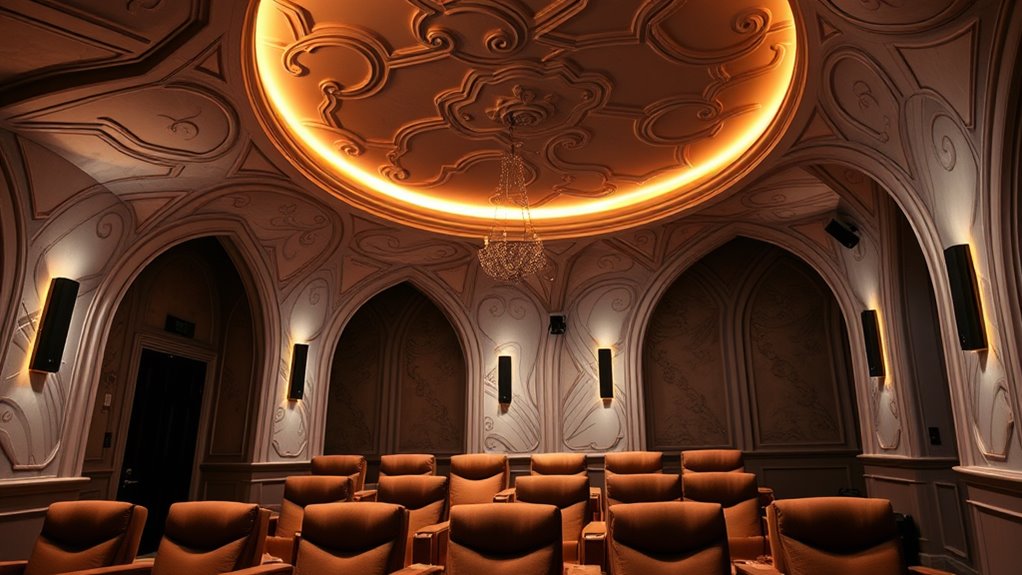
After considering the acoustic benefits of plastering, it's time to explore how this versatile material can enhance your home theater's design.
Integrating plaster into your space allows for an array of plaster aesthetics that can elevate the overall ambiance. You can choose from various types, like gypsum for durability or Venetian plaster for a high-gloss finish, to achieve the style you envision.
Incorporating ornamental plaster elements—like moldings, cornices, or ceiling roses—can add a touch of elegance and sophistication. These design integrations not only serve functional purposes but also create visual interest through texture and color.
By utilizing pigments or aggregates, you can customize the plaster to perfectly match your home theater's theme.
Consider using artistic techniques like casting and carving to create unique features that draw the eye and enhance the viewing experience.
As you plan your design, remember that modern plaster methods allow for easier applications over existing surfaces, making it a practical choice for renovations.
With thoughtful integration of plaster, you'll transform your home theater into a space that's both acoustically optimized and visually stunning. Moreover, incorporating materials like gypsum plaster ensures enhanced fire safety due to its inherent fire-resistant properties.
Tips for Plaster Installation
Preparing for plaster installation can feel overwhelming, but with the right tips, you can achieve a professional finish. By following these essential guidelines, you'll guarantee a smooth process and stunning results.
1. Safety Precautions: Always wear protective gear, including gloves and a mask, to guard against dust and chemicals.
Confirm proper ventilation in your workspace to avoid inhaling fumes.
2. Mixing Plaster: Use clean equipment and water to prevent contamination and premature setting.
Remember to add plaster to water for a uniform mix, aiming for a melted ice cream consistency.
A lump-free mixture is vital for a smooth finish.
3. Application Timing: Apply plaster when it feels tacky but not too wet to enhance bonding.
Keep room conditions cool to prevent rapid plaster drying.
Start small, following the six stages of plastering for best results.
It's also crucial to practice plaster mixing and application on a small area first to ensure you achieve the correct plaster consistency.
Custom Plaster Designs
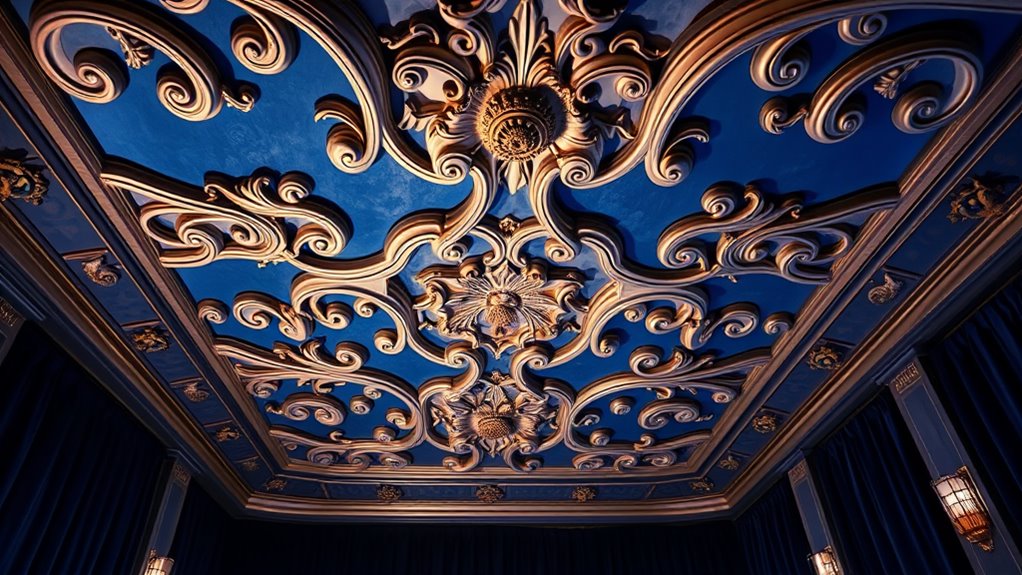
Custom plaster designs offer endless possibilities to elevate the aesthetic of your home theater. By utilizing custom moldings and decorative textures, you can create a space that truly reflects your style.
The versatility of plaster allows you to cast it into any shape, meaning you can achieve intricate designs and stunning patterns that serve as focal points in your theater.
You can choose from various materials like gypsum, lime, and sand, which are known for their durability. Mixing in pigments or aggregates can further enhance your designs, adding depth and visual interest.
For a polished look, consider traditional white molding plaster, which can be painted or faux finished to mimic natural wood or marble.
Using molds and artistic techniques like color and shadow can help you achieve that dimensional depth you're after. Additionally, lightweight gypsum-based plasters allow for clean, smooth finishes that complement contemporary aesthetics.
Proper surface preparation, such as ensuring the surface is clean and dust-free, is crucial before applying plaster to achieve a seamless and professional finish.
Enhancing Visual Appeal
Transforming the visual appeal of your home theater can be achieved through a variety of plastering techniques that bring depth and character to the space.
By focusing on color dynamics and texture interplay, you can create an environment that enhances your viewing experience. Here are some effective techniques to evaluate:
- Venetian Plaster: This polished, high-sheen finish highlights color variations, creating a luxurious backdrop.
- Layered Application: Multiple thin layers can produce a distinctive textured effect that adds visual interest.
- Colored Acoustical Plaster: Incorporate sound-absorbing properties while introducing vibrant hues to your space.
Using pigmented plaster allows you to explore a wide range of colors, while decorative additives enhance both texture and color.
Burnishing your Venetian plaster will give it that sought-after gloss, reflecting light beautifully throughout the room.
A key aspect to achieving this glossy finish involves focusing on the importance of surface preparation.
Frequently Asked Questions
How Long Does Plaster Take to Dry Completely?
Plaster drying times depend on plaster types and application thickness. Generally, it takes 1 to 4 hours to dry to the touch, but full curing can take days to weeks, especially with thicker layers.
Can Plaster Be Painted Immediately After Application?
Painting plaster right after application's like jumping into a pool before checking the water—risky! Wait until the plaster's fully dry, usually a few days, to avoid peeling paint and guarantee a flawless finish.
Is Plastering a DIY Project or Best Left to Professionals?
Plastering can be a DIY project, but consider your skill level and patience. Professionals offer advantages like expertise and efficiency, ensuring high-quality finishes. Assess DIY considerations versus professional advantages to make the best choice for your project.
What Are Common Mistakes to Avoid During Plastering?
Ever wondered why your plaster looks uneven? Avoid common mistakes by ensuring proper surface preparation and achieving the right plaster consistency. Rushing and neglecting details can lead to frustrating, unsatisfactory results you won't want to see.
How Do I Repair Cracks in Plasterwork?
To repair cracks in plasterwork, start with crack assessment. Use flexible patching compounds or joint compound, smooth it out, sand, and then prime and paint for a seamless finish. You'll achieve a professional look!
Conclusion
So, while you might think plastering is just a mundane task, it's actually your secret weapon for crafting a stunning home theater. By blending artistic techniques with modern styles, you can transform an ordinary space into an extraordinary experience. Who knew a little plaster could do so much? With the right materials and creative designs, you'll not only enhance the aesthetics but also the acoustics, ensuring your movie nights are as impressive as the films themselves.

When it comes to choosing the right plasterboard for your bathroom, there's a lot to consider. A recent survey from Read more

Have you ever wondered why plastering is so expensive? It can be a daunting task to tackle on your own, Read more

Painting directly onto plaster can be a daunting task, especially if you are not familiar with the process. While plaster Read more