

When you consider durability and versatility, acrylic-based plaster stands out as a top choice for builders in Nottingham. Its impressive weather resistance and extensive color options make it appealing for diverse projects. Plus, with quick-drying properties and low VOC content, it aligns with modern environmental standards. But what really sets it apart in the competitive construction landscape? Understanding the specific benefits and applications of this material can reveal why it's become a staple in local construction practices.
Reasons for Popularity
Acrylic-based plaster has gained immense popularity among builders in Nottingham for several compelling reasons. One significant factor is its durability and performance. Unlike traditional finishes, acrylic render offers exceptional weather resistance, flexing with the surface to prevent cracking or peeling. This means you can count on it lasting for decades with minimal maintenance, making it a smart investment. Additionally, the expected lifespan of acrylic render can reach several decades with proper care, further solidifying its value.
However, builders do face some application challenges with acrylic plaster. Mastering the right installation techniques is essential for achieving that flawless finish. Fortunately, the ease of application—with options like brush, roller, or sprayer—means you can adapt your methods to suit various projects.
Moreover, its versatility is another reason it's favored. The wide range of color options and aesthetic flexibility allows you to match existing finishes effectively, enhancing the overall design appeal of any building.
Plus, it's environmentally friendly, containing no VOCs, which adds to its attractiveness.
Finally, its breathability helps prevent trapped moisture, reducing the risk of damage over time. Gypsum plaster, with its capability to withhold high temperatures and release water vapor when heated, provides valuable fire safety benefits often utilized in construction, notably in calcination processes. With all these benefits combined, it's no surprise that acrylic-based plaster is becoming the go-to choice for builders in Nottingham.
Key Benefits for Builders
Durability stands out as a key benefit for builders when choosing acrylic-based plaster. This material meets builder preferences by offering quick drying times, which accelerates project timelines and helps you tackle application challenges efficiently. Additionally, acrylic-based plaster is known for its environmentally friendly properties, making it a popular choice for those who prioritize sustainability.
With acrylic plaster, you'll enjoy a more forgiving application process due to its extended open time, making it easier to work with.
Another significant advantage is its lower maintenance requirements. Acrylic plaster is washable, making it ideal for moisture-prone areas like kitchens and bathrooms.
Its inherent flexibility, thanks to acrylic modifiers, also means it won't crack easily, allowing you to use it in various settings without worry.
Cost-effectiveness is another vital factor. Acrylic plaster's lower material costs and reduced labor time make it budget-friendly, which is essential for builders working within tight budgets.
You can even apply it over existing coatings, minimizing waste and the need for extensive repairs.
However, those prioritizing maximum sustainability might consider clay plasters due to their low embodied energy and non-toxic properties, which contribute to better indoor air quality and a healthier living environment.
Ideal Project Types
When it comes to selecting the right finish for various projects, acrylic-based plaster shines across multiple applications. Its versatility makes it a top choice for both residential and commercial endeavors. Whether you're working on schools, hospitals, or large-scale developments, you'll find that acrylic render meets numerous project evaluations. This adaptability is particularly beneficial in projects where bullet lists can help prioritize tasks and streamline the planning process.
Additionally, the protection afforded by acrylic-based plaster against water and damp damage is a significant advantage in regions with high moisture levels.
Here's a quick look at ideal project types for acrylic-based plaster:
| Project Type | Key Features |
|---|---|
| Residential Projects | Versatile, customizable, low maintenance |
| Commercial Projects | High performance, enhanced aesthetics |
| Educational Institutions | Inviting environments, rich color options |
| Healthcare Facilities | Clean appearance, durability, ease of maintenance |
| Large-Scale Projects | Regulatory compliance, professional installation |
Each type has its unique application challenges, but acrylic render is designed to tackle them effectively. Its durability and resistance to environmental factors reduce the frequency of repainting, making it a smart choice for long-term projects. Plus, the rich color palette ensures that aesthetics aren't compromised. So, whether you're starting a new build or renovating, acrylic-based plaster is an excellent option to evaluate.
Technical Specifications
Choosing the right finish is just the beginning; understanding the technical specifications of acrylic-based plaster is vital for guaranteeing peak performance in your projects.
This plaster is composed of a water-based acrylic polymer dispersion, mineral fillers, and additives to prevent algae and mold growth. Its application range is between +5°C to +25°C, with drying conditions extending to +35°C, making it essential to monitor temperature and humidity levels below 80% to avoid application challenges.
When applying, you can use a stainless-steel trowel or mechanical spraying methods. Verify the substrate is clean, dry, and properly primed for maximum adhesion. The drying time typically varies from 12 to 48 hours, depending on environmental factors.
In terms of performance characteristics, acrylic-based plaster boasts high adhesion to various substrates, exceptional durability, and impressive color fastness.
It's also highly flexible, reducing the likelihood of cracking over time. With easy maintenance, this plaster is designed to withstand weather conditions while maintaining its visual appeal.
Understanding these technical specifications will help you tackle your projects with confidence and efficiency.
For historic restoration projects, consider that breathability and flexibility are crucial factors, often leading to the preference for lime plaster due to its ability to accommodate ground movement and enable moisture evaporation.
Nottingham Builders' Expertise

Understanding Nottingham Builders' expertise can make all the difference in your home construction journey. With over 40 years of experience, they provide budget accuracy that guarantees you won't face unexpected expenses. They offer a clear breakdown of costs, maintaining transparency throughout the process, so you know exactly what to expect.
When it comes to designing your custom home, Nottingham Builders collaborate closely with architects and clients. They take your unique needs and preferences into account, creating detailed blueprints that reflect your vision.
This attention to detail extends to the construction process, where they establish a clear schedule and conduct regular inspections to guarantee everything complies with building codes.
Nottingham Builders are committed to using high-quality, sustainable materials, reflecting a dedication to excellence and luxury aesthetics. Their portfolio showcases a variety of design styles, with a special focus on kitchens, bathrooms, and basements.
As you work with them, you can trust their expertise will lead to a home that not only meets your expectations but exceeds them, guaranteeing a satisfying and efficient construction experience.
For specialized construction needs, such as plastering repairs, local plasterers in Nottingham like Quality Plastering Nottingham are available to provide comprehensive services.
Market Trends
Market Trends
In today's construction landscape, market trends reveal a growing demand for acrylic-based plaster, particularly in high-end residential and commercial projects.
You're likely noticing significant market growth driven by rapid urbanization and infrastructure development. As construction output is expected to rise to $15.5 trillion by 2030, the competitive landscape is shifting in favor of versatile materials like acrylic plaster.
Prices for decorative finishes can vary widely, from $5-7 per square foot for basic options to $13-20+ for high-end custom finishes.
This pricing variability reflects the increasing preference for smooth finishes over textured ones, aligning with current aesthetic trends. The North American market, fueled by a 13.8% rise in private-sector home starts, exemplifies how home improvement trends are influencing demand for acrylic plaster.
As builders like you adapt to these evolving needs, consider that the Asia Pacific region is also dominating the market due to unprecedented urban growth.
Innovations in eco-friendly materials and prefabricated construction methods further enhance the appeal of acrylic plaster, solidifying its position in today's competitive construction environment.
Plastering techniques such as skimming and rendering are also seeing a resurgence in popularity, providing additional benefits including improved insulation and weatherproofing.
Environmental Safety Features
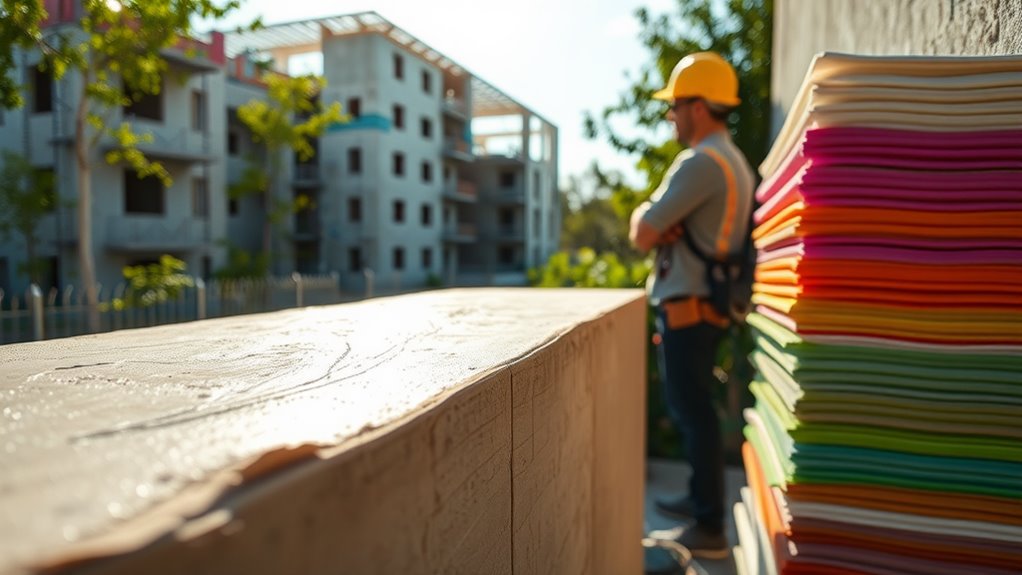
Acrylic-based plaster offers a mix of impressive durability and unique environmental safety features, making it a popular choice in modern construction.
When considering its environmental safety, you'll find several key factors that align with safety standards and environmental regulations:
- Moisture Resistance: Its impermeable nature helps prevent moisture-related issues, reducing the risk of mold growth in spaces with high humidity.
- Energy Efficiency: Acrylic plaster requires less energy for production compared to traditional materials, contributing to lower overall carbon emissions during manufacturing.
- Compatibility: This type of plaster can be applied to various surfaces, allowing for versatile use while ensuring compliance with different building codes.
- Minimized Waste: Although not biodegradable, following proper disposal guidelines can help mitigate environmental impact.
While there are health risks associated with improper handling, you can minimize these concerns by using protective equipment and ensuring adequate ventilation.
Additionally, combining acrylic plaster with moisture-resistant plasterboard can further enhance a structure's resistance to damp and moisture damage.
Application Methods
Application Methods
When considering application methods for acrylic-based plaster, you'll find a variety of techniques that cater to different project needs and preferences.
First up is manual application with a trowel. This method involves thorough mixing and applying the plaster in thin, even layers. It's perfect for smaller projects, guaranteeing a consistent finish and allowing for various textures.
If you're tackling larger surfaces, spray application might be your best bet. This technique uses specialized machines for efficient coverage but requires skilled operators to maintain uniformity. It's ideal for commercial buildings or extensive residential projects, saving you time.
For a quicker approach, consider roller application. Using a thick paint roller, you can achieve smooth finishes on interior walls and ceilings. While faster than troweling, it still demands careful surface preparation to avoid streaking.
Lastly, machine and stencil application offers speed and decorative textures for large-scale projects. This technique guarantees uniform coverage and enhances aesthetic appeal, perfect for feature walls or exteriors.
Each application technique has its benefits, so choose the one that aligns best with your project's goals. Familiarization with plastering techniques through tutorials and practice is essential to achieve professional results.
Cost-Effectiveness Overview

Cost-Effectiveness Overview
Choosing the right application method for acrylic-based plaster not only impacts the finish but also plays an important role in the overall cost-effectiveness of your project.
When you conduct a cost analysis, consider these key factors:
- Average Material Costs: Expect to pay around £30 per square meter for acrylic rendering. For a 200m² semi-detached house, that totals £6,000 to £7,000.
- Labour Expenses: Rendering specialists charge between £130 to £250 per day, influencing your overall pricing strategies based on project duration.
- Equipment Investment: Basic tools like mixing buckets and trowels cost around £50 total, which is a relatively minor upfront expense.
- Potential Savings: Bulk buying discounts can greatly lower supply costs, making it essential to plan your purchases strategically.
Professional skills Labour Costs are also a significant factor in determining overall project expenses, emphasizing the importance of hiring skilled plasterers.
Aesthetic Versatility
The aesthetic versatility of acrylic-based plaster makes it a popular choice for both residential and commercial projects. You can achieve a range of finishes from high-gloss to matte, catering to different design preferences.
Whether you prefer smooth, polished surfaces or textured, rustic finishes, acrylic plaster allows for creative expression. You can also apply decorative textures through stencils, making intricate patterns a reality for your feature walls.
Color psychology plays a significant role in design, and with acrylic-based plaster, you have access to an unlimited palette of hues. Its synthetic pigments guarantee greater color consistency, so your chosen shades remain vibrant and true over time.
This durability means that your walls will resist fading and dirt accumulation, maintaining their aesthetic appeal.
As texture trends evolve, acrylic-based plaster adapts seamlessly, enhancing any space with its tailored finishes. Since it adheres well to various substrates and is easy to apply, you can create customized designs that reflect your style while guaranteeing long-lasting performance.
Ultimately, this versatility makes acrylic-based plaster an excellent choice for achieving the look you desire in any project. Achieving a smooth finish often involves skimming and devilling, techniques that skilled plasterers master to produce flawless surfaces.
Frequently Asked Questions
How Does Acrylic Plaster Compare to Traditional Plastering Options?
When comparing acrylic plaster to traditional options, you'll find acrylic benefits like quicker application and easier maintenance. However, consider plaster durability; traditional plaster often lasts longer, despite requiring more upkeep over time.
What Is the Typical Drying Time for Acrylic-Based Plaster?
Imagine a flower blooming; the drying process of acrylic plaster unfolds similarly. Typically, it dries to the touch in 1-2 hours, with a curing time of 4-6 hours, depending on environmental conditions.
Can Acrylic Plaster Be Painted Over?
Yes, you can paint over acrylic plaster! Utilize acrylic benefits like strong adhesion and reduced absorbency. Employ proper painting techniques, such as sealing and layering, to guarantee a vibrant, durable finish that stands the test of time.
Are There Specific Tools Required for Acrylic Plaster Application?
Yes, for acrylic plaster application, you'll need tools like stainless steel trowels and floats. Guarantee proper surface preparation, using the right application techniques to achieve a smooth, professional finish while maintaining safety precautions throughout the process.
How Do Weather Conditions Affect Acrylic Plaster Application?
Weather conditions greatly impact your acrylic plaster application techniques. Temperatures below 55°F can hinder proper setting, while high humidity and rapid drying may lead to cracking. Always monitor forecasts and adjust your methods accordingly for ideal results.
Conclusion
To sum up, it's no surprise that builders in Nottingham are turning to acrylic-based plaster; its blend of durability, aesthetic versatility, and environmental safety makes it a standout choice. Notably, studies show that using high-quality plaster can actually extend a building's lifespan. So, if you want a reliable, stylish finish for your next project, consider acrylic plaster—it's not just a trend; it's a smart investment for any builder committed to quality and sustainability.

When it comes to choosing the right plasterboard for your bathroom, there's a lot to consider. A recent survey from Read more

Have you ever wondered why plastering is so expensive? It can be a daunting task to tackle on your own, Read more

Painting directly onto plaster can be a daunting task, especially if you are not familiar with the process. While plaster Read more