

When considering materials for your exterior walls, you'll weigh durability, maintenance, and aesthetics. Stucco offers a robust option with minimal upkeep, while lime plaster provides breathability and ease of repair. Each choice has its merits and drawbacks, which could markedly impact the longevity and appearance of your home. As you explore the characteristics of these materials, you'll find that your specific environmental conditions and design preferences play essential roles in making the right decision. So, which one aligns best with your vision?
Composition and Materials
When considering the composition and materials of stucco and lime plaster, it's essential to recognize their fundamental differences.
Stucco primarily consists of stucco ingredients such as lime, sand, water, and Portland cement, which enhances its durability. In contrast, lime plaster components include lime, sand, water, and sometimes gypsum, focusing on a more natural composition.
The binder differences between these two materials are significant; stucco utilizes Portland cement, whereas lime plaster relies on lime or gypsum as its binder. This distinction affects their performance and applications.
Additive types also vary: stucco often incorporates animal or plant fibers, acrylics, or glass fibers to boost strength and flexibility. On the other hand, lime plaster may include marble or brick dust, as well as sawdust, which contributes to its unique texture and ecological benefits.
While both materials share common components like water and sand, their specific formulations result in different characteristics. Additionally, modern stucco typically includes a mix of sand, Portland cement, lime, and water, which enhances its performance compared to traditional formulations.
Lime plaster's breathability, facilitated by its porous structure, allows for moisture evaporation, reducing the risk of condensation damage, making it particularly suitable for historic buildings and restoration projects.
Understanding these composition and material differences can help you make informed decisions for your construction or renovation projects.
Texture and Appearance
Texture and appearance play an essential role in distinguishing stucco from lime plaster. The texture differences are striking; stucco presents a rougher, more porous finish, ideal for exterior walls. This texture not only enhances aesthetic appeal but also improves weather resistance.
You'll find that stucco can be finished in various textured styles, allowing for versatile exterior designs. Its application involves multiple layers—scratch, brown, and finish coats—over metal lath, which is essential for proper adhesion.
On the other hand, lime plaster offers a smoother, harder finish, providing a different aesthetic option. Its moldable nature allows for unique designs, expanding your possibilities. Additionally, lime plaster's longevity enhanced with additives makes it a reliable choice for outdoor applications.
While plaster can be used both indoors and outdoors, its versatility contrasts with stucco's exclusive external application.
When choosing between these materials, consider your desired texture and appearance. If you prefer a distinctive, textured finish with robust durability for outdoor use, stucco might be your go-to.
However, if you're looking for design flexibility with various appearance options, lime plaster could suit your needs better. For outdoor projects requiring a balance between durability and aesthetic appeal, cement plaster provides exceptional strength and is also a viable option. Ultimately, your personal aesthetic preferences will guide your decision.
Durability and Longevity
Durability and longevity are essential factors to evaluate when choosing between stucco and lime plaster for your project.
In a performance comparison, stucco generally boasts superior resistance to moisture and weathering due to its Portland cement base. It effectively withstands various climates and requires minimal maintenance, often not needing sealants or repainting once applied. Although it may experience color changes over time, its ability to resist cracking and deformation makes it an attractive choice for those seeking longevity.
On the other hand, lime plaster offers remarkable breathability and moisture regulation, which can enhance indoor air quality and reduce dampness. With proper care, lime plaster can last for decades and requires less maintenance than many other plaster types. It also allows for easier repairs, utilizing natural properties that facilitate restoration. Furthermore, lime plaster is eco-friendly, as it absorbs atmospheric CO2, contributing positively to environmental sustainability. For interior applications, particularly in wet areas like bathrooms, a variant of lime plaster known as Tadelakt plaster provides additional benefits with its waterproof and mold-resistant properties.
Ultimately, both materials have distinct advantages. If you prioritize moisture resistance and minimal upkeep, stucco may be the best option. If you value breathability and environmental sustainability, lime plaster could serve you well.
Consider your specific needs and the long-term implications of each material's durability before making your decision.
Installation and Application
Choosing the right material is only the beginning; understanding the installation and application process is equally important for achieving ideal results. Here are some key steps you need to follow:
- Waterproofing: Attach two layers of Grade D waterproof building paper over the wall sheathing.
- Lath Installation: Install expanded metal lath or wire netting to guarantee proper adhesion.
- Control Joints: Place control joints to create manageable wall panels and accommodate expansion.
- Coat Layers: Follow a three-coat system, starting with a base coat, then a scratch coat, and finally a finish coat.
While employing these installation techniques, you may encounter application challenges like achieving uniform thickness and guaranteeing proper adhesion to the lath.
For the base coat, hold your trowel at a 45-degree angle to force the stucco into the lath, then screed to a depth of 3/8 inch.
After the scratch coat sets, apply the brown coat evenly.
Finally, guarantee a smooth finish with a 1/8 inch thick finish coat. Proper attention to these details will lead to a durable exterior that performs well over time.
Environmental and Health Benefits

Environmental and Health Benefits
Exploring the environmental and health benefits of stucco reveals its impressive attributes that contribute to both sustainability and occupant well-being.
One of the standout features of stucco is its high thermal mass properties, allowing it to absorb and store heat during the day and release it at night. This characteristic reduces reliance on heating and cooling systems, promoting energy efficiency and mitigating climate change.
Stucco's durability is another key factor. Its long lifespan minimizes the need for frequent replacements, aligning with sustainability practices by reducing waste. Additionally, stucco can be applied over existing surfaces, further cutting down on material waste.
From a health perspective, stucco is non-toxic and doesn't emit harmful chemicals, making it a safe choice for inhabitants. Its fire-resistant qualities enhance safety, while its solid barrier prevents pest infestations and resists moisture, which helps inhibit mold and mildew growth.
Moreover, stucco generates fewer pollutants during production and utilizes natural ingredients, reducing its extractive impact.
Similar eco-friendly advantages can be found in clay plasters, which offer low embodied energy and carbon benefits along with natural moisture-regulating properties.
Cost Comparison
When reflecting on the cost of exterior finishing options like stucco and lime plaster, you'll find a notable range in pricing and installation requirements. Understanding these aspects can help you make a more informed choice.
Here are a few key points to reflect on:
- Stucco costs about $8 per square foot, requiring two to three coats and a labor-intensive installation process.
- Lime plaster ranges from $2 to $10 per square foot, typically needing only two coats and offering greater workability.
- Durability: Stucco lasts up to 50 years, while lime plaster can last between 30 and 70 years, depending on conditions.
- Installation time: Stucco can take up to 90 days to dry, whereas lime plaster generally cures in 1-2 weeks.
In terms of cost efficiency, lime plaster may present a better upfront investment due to its lower installation complexity and potential for reduced labor costs.
Pricing trends indicate that while both materials have varying costs, lime plaster's advantages in workability and maintenance may justify its expenses in the long run.
Aesthetic Versatility
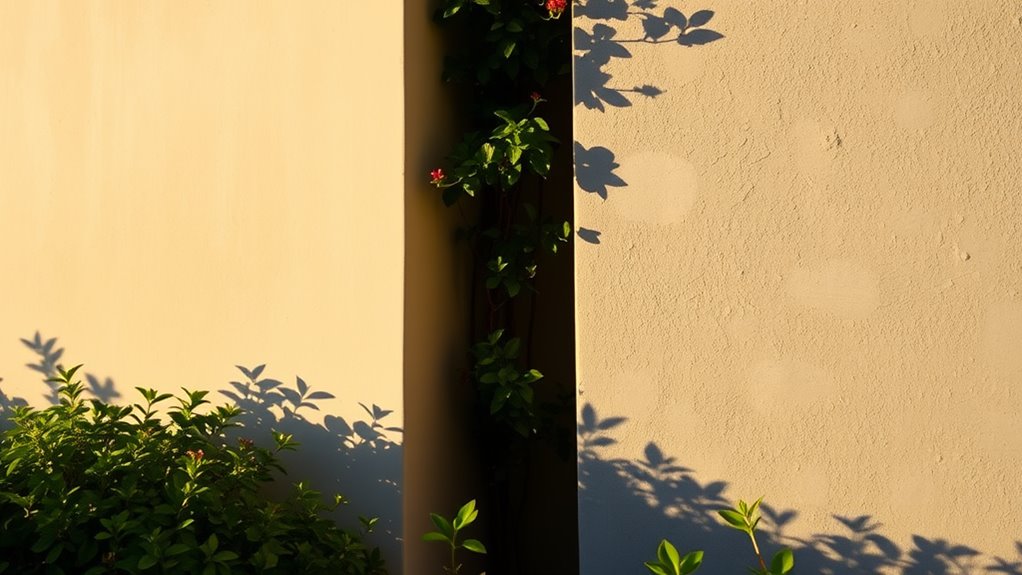
Cost considerations between stucco and lime plaster naturally lead to a closer look at their aesthetic versatility. Both materials exhibit remarkable design adaptability that caters to a range of architectural styles.
Stucco offers textural variability, allowing for finishes that span from rough to smooth, and even intricate patterns. You can incorporate different aggregates or combine stucco with natural stone for a unique aesthetic. Additionally, stucco's coloration options—thanks to natural pigments—enable you to tailor the look to match your architectural vision.
On the other hand, lime plaster impresses with its elegant finish options, such as smooth and glossy surfaces. Its ability to develop a distinctive patina over time adds to its aesthetic appeal. Lime plaster can also be colored in various tones, lending itself to custom designs that reflect your style.
Both materials provide avenues for aesthetic innovation, whether you're aiming for a modern vibe or a historic feel.
Ultimately, choosing between stucco and lime plaster hinges not just on cost but on how well each material can fulfill your design aspirations while enhancing your exterior's overall look.
Maintenance Requirements
Maintaining stucco and lime plaster requires attention to detail and a proactive approach to guarantee longevity and performance. Understanding the distinct maintenance requirements for each material can help you make informed decisions. Consider these key factors:
- Maintenance Frequency: Stucco needs cleaning at least twice a year, while lime plaster requires less frequent major repairs.
- Cleaning Techniques: Use a garden hose or low-pressure power washer for stucco; for lime plaster, opt for gentle cleaning with mild detergent and water.
- Repair and Sealing: Inspect stucco regularly for cracks, repairing them with waterproof acrylic caulk and sealing every 10 years. Lime plaster's flexibility reduces repair needs.
- Drainage Maintenance: Confirm proper drainage for both materials by clearing gutters and grading the soil to prevent moisture accumulation.
Regular inspections are essential for both stucco and lime plaster to catch potential issues early.
By following these guidelines, you'll not only enhance the appearance of your exterior walls but also extend their lifespan considerably.
Prioritizing maintenance will save you time and money in the long run.
Weather Resistance

Stucco and lime plaster both exhibit distinct weather resistance characteristics that influence their suitability for various environments.
Stucco generally offers superior durability due to its composition, often including Portland cement, which enhances its strength and moisture management capabilities. This makes stucco less prone to water damage and able to withstand various weather conditions, including temperature extremes. Its textured surface also provides an additional layer of protection for underlying structures.
On the other hand, lime plaster boasts excellent flexibility and permeability, allowing for effective moisture diffusion and evaporation. This quality reduces the risk of water damage, making lime plaster suitable for regions with high humidity.
While lime plaster is less brittle and more forgiving under stress, it may not withstand harsh weather as effectively as stucco.
Long-Term Value
When evaluating the long-term value of exterior finishes, it's essential to take into account durability, cost-effectiveness, environmental impact, and aesthetic appeal.
Here's a breakdown to reflect upon:
- Durability: Stucco can last up to 50 years with minimal upkeep, while lime plaster varies between 30 to 70 years, depending on maintenance.
- Cost-Effectiveness: Stucco costs about $8 per square foot. While lime plaster is cheaper upfront, its frequent repairs can lead to higher long-term costs.
- Environmental Impact: Both materials are eco-friendly, but stucco's durability reduces waste over time, making it a more sustainable choice.
- Aesthetic Value: Stucco offers a classic look that enhances property value, while lime plaster provides versatility for custom designs.
Choosing the right exterior finish is a long-term investment that directly impacts your property value.
Stucco's robustness and low maintenance make it a compelling option for homeowners focused on durability and aesthetic appeal, while lime plaster might appeal to those valuing its adaptability and elegance.
Ultimately, weigh these factors against your specific needs to make an informed decision.
Frequently Asked Questions
How Do Stucco and Lime Plaster Compare in Terms of Energy Efficiency?
When comparing energy efficiency, stucco offers superior insulation properties, enhancing energy savings by regulating temperature effectively. Lime plaster, while breathable and sustainable, lacks the same level of thermal regulation, making stucco the more energy-efficient choice.
Can Stucco Be Painted or Stained Easily?
Have you ever wondered how vibrant your stucco could look? With proper painting techniques and diverse staining options, you can easily transform its appearance. Just guarantee you follow the right preparation steps for lasting results.
What Are the Most Common Repair Issues for Both Materials?
You'll encounter common repair issues like cracks and stains in both materials. Repair techniques vary, and understanding maintenance costs is essential for effective management. Regular inspections can help mitigate these problems before they escalate.
How Do Climate Conditions Affect Stucco and Lime Plaster Performance?
Imagine a sponge, soaking up moisture; that's stucco in humid climates. Temperature fluctuations can crack it, while lime plaster flexibly adapts, resisting damage. Understanding these dynamics guarantees you choose the right material for your environment.
Are There Any Specific Tools Needed for Application?
For effective application techniques, you'll need specialized tools for surface preparation. Essential tools like trowels, floats, and mixers guarantee a smooth finish, while safety gear protects you during the process, enhancing overall efficiency and quality.
Conclusion
In choosing between stucco and lime plaster for your exterior walls, consider how the right material coincides with your home's unique environmental challenges and aesthetic goals. While stucco excels in durability and maintenance, lime plaster offers breathability and easier repairs. Balancing these factors will not only enhance your home's appearance but also its long-term value. Ultimately, you'll want to select the option that aligns best with your lifestyle and the climate, ensuring your investment stands the test of time.

When it comes to choosing the right plasterboard for your bathroom, there's a lot to consider. A recent survey from Read more

Have you ever wondered why plastering is so expensive? It can be a daunting task to tackle on your own, Read more

Painting directly onto plaster can be a daunting task, especially if you are not familiar with the process. While plaster Read more