

Like the protective walls of a medieval castle, plaster serves as a crucial safeguard in your home against fire hazards. You might not realize how effective certain types of plaster can be in slowing down flames and heat, providing you with precious moments in an emergency. From gypsum to cement-based options, each type offers unique benefits that could enhance your home's safety. But are you aware of the best installation techniques and maintenance practices to maximize these advantages? Exploring this topic can reveal essential strategies for protecting your living space.
Key Benefits of Fire Resistant Plaster
When it comes to safeguarding your home from fire hazards, fire-resistant plaster stands out due to its key benefits. This material considerably enhances fire resistance, giving occupants vital extra time to evacuate during a fire.
By slowing down the spread of flames and heat, fire-resistant plaster acts as a thermal barrier, allowing people to escape safely—up to four hours compared to less than one hour for traditional lime plaster.
Its plaster composition includes non-flammable materials like gypsum, which withstand temperatures exceeding 1,800°F without degrading. This high heat tolerance guarantees that the plaster maintains its structural integrity, providing essential shielding for load-bearing structures against intense heat. Moreover, its low thermal conductivity ensures that adjacent rooms remain cooler during a fire, further enhancing safety.
Additionally, as it heats up, fire-resistant plaster releases water vapor, offering thermal insulation that cools surrounding areas.
Types of Fire Resistant Plasters
Understanding the various types of fire-resistant plasters is essential for selecting the right material to enhance your home's safety. Each type offers unique benefits, depending on its composition and applications.
| Type of Plaster | Key Features |
|---|---|
| Gypsum-Based Plasters | Good for interior use, fire resistance of 1-4 hours, eco-friendly with soundproofing properties. |
| Cement-Based Plasters | Strong fire protection, withstands high heat, ideal for large structures due to its durability. |
| Intumescent Plasters | Swells upon heat exposure, forming an insulating barrier, offers up to 4 hours fire resistance. |
Gypsum properties contribute to its ability to release steam when heated, cooling the area and inhibiting flames. On the other hand, cement benefits include forming a hard shell that maintains integrity under high temperatures. Lightweight plasters, incorporating aggregates like perlite, provide excellent insulation while reducing weight, making them suitable for high-rise constructions. Additionally, fire-resistant plaster is effective in retrofitting older structures for improved safety.
Selecting the right plaster type based on these characteristics will greatly enhance your home's fire resistance and overall safety.
Installation Techniques for Fire Protection
Effective installation techniques are essential for maximizing the fire protection provided by fire-resistant plasters. To optimize your fire safety, consider increased thickness in your application methods. Thicker layers not only extend protection time but also enhance the robustness of the char layer, delaying heat penetration to underlying surfaces. This is particularly important for load-bearing structures and fire-rated assemblies. Additionally, the use of gypsum's unique properties contributes to its effectiveness in fire resistance as it does not transmit heat until fully calcined.
Material compatibility plays an important role in the effectiveness of your installation. Combining fire-resistant plaster with materials like mineral wool or ceramic fibre blankets can greatly improve thermal insulation and structural integrity, especially in high-risk areas.
Proper substrate preparation is non-negotiable; incorporating non-combustible mineral additives such as perlite or vermiculite can enhance fire resistance.
Using fire retardant additives like borates or phosphates, along with intumescent coatings, can provide additional layers of protection.
Moreover, optimizing the curing process guarantees that the plaster achieves the desired density and strength. Consider employing phase change materials (PCMs) to absorb and release thermal energy effectively.
Repair and Maintenance Practices
Maintaining the integrity of fire-resistant plaster is just as important as its initial installation. You should adopt systematic repair techniques and preventive maintenance strategies to guarantee long-term performance. Regular inspections can help identify issues early, while proper substrate preparation is essential for effective repairs.
| Repair Techniques | Maintenance Strategies |
|---|---|
| Patching and resurfacing | Regular inspections |
| Material selection | Cleaning procedures |
| Layering with other materials | Environmental control |
| Systematic repairs | Ageing considerations |
When making repairs, guarantee material compatibility with the original plaster to maintain fire resistance. Incorporating additional fibers or applying intumescent coatings can further enhance protection. Additionally, always consider the effects of aging—regular maintenance can mitigate these challenges. Understanding calcination and its role in gypsum plaster's fire resistance is crucial for effective maintenance and repair strategies.
Understanding Fire Ratings and Regulations
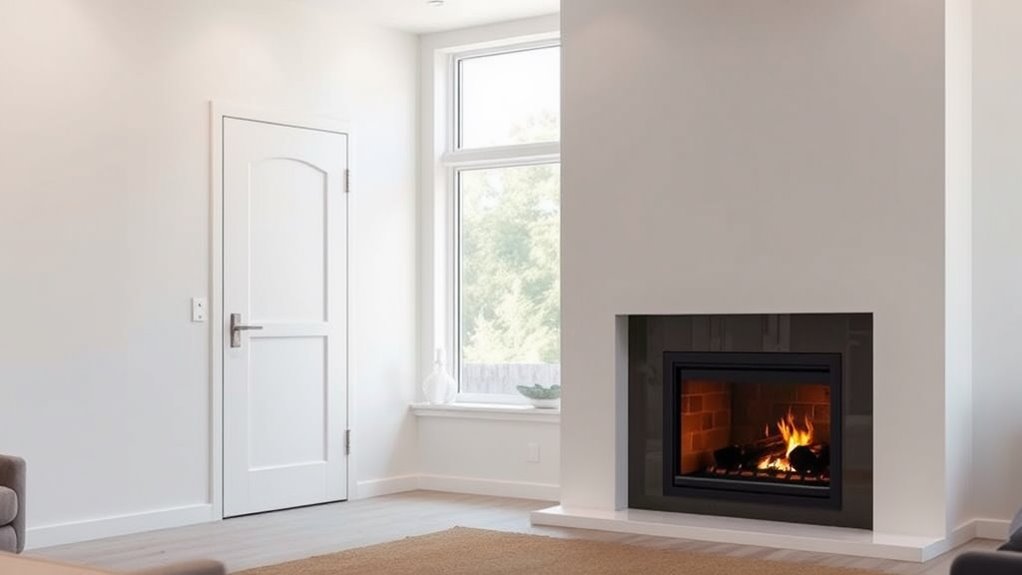
When it comes to fireproofing your home, knowing fire ratings and regulations is essential for ensuring safety and compliance. Fire rating classifications provide a systematic way to evaluate materials based on their flame spread index (FSI). The FSI measures how materials support and propagate fire, with ratings ranging from Class A (0-25) to Class C (76-200).
For instance, materials like brick and gypsum classify as Class A due to their low flame spread ratings, making them ideal for fire-resistant construction.
Understanding the legal requirements is also vital. In locations like New York, buildings exceeding six stories must comply with strict fireproofing regulations, prohibiting the use of wood in key structural elements. Instead, fire-resistant materials must be selected based on their classifications to meet local codes.
Additionally, compliance with standard fire tests such as ASTM E-84 and ASTM E-119 is necessary for ensuring that materials withstand fire exposure effectively.
Fire Safety in Building Design
Incorporating fire safety strategies into building design is fundamental for protecting occupants and minimizing damage. You must prioritize fire risk mitigation by controlling ignition sources and limiting available fuel. This includes implementing safe electrical systems and employing lightning protection systems to channel electrical energy safely.
Effective communication and alert systems are essential for early detection and prompt evacuation planning. Guarantee fire systems swiftly alert occupants and emergency services, while maintaining clear emergency response plans that everyone understands.
Designing for safe escape involves creating direct, clearly marked routes that accommodate all occupants, including those with mobility challenges. Refuge areas can provide temporary safety during evacuations, emphasizing the need for adequate lighting and signage.
Containment is equally important; passive measures like fire-resistant materials and compartmentalization help limit fire spread. Active measures, such as fire suppression systems, complement these strategies.
Regular inspections are necessary to guarantee containment measures remain effective.
Frequently Asked Questions
How Does Fire Resistant Plaster Compare to Traditional Plaster?
Fire resistant plaster markedly outperforms traditional plaster due to its enhanced fire resistance properties and thermal insulation. It maintains structural integrity under heat, providing extended protection and improved safety during fire emergencies compared to conventional alternatives.
Can Fire Resistant Plaster Be Painted or Covered?
Yes, you can paint fire-resistant plaster using appropriate fireproof coatings. Make certain you follow specific painting techniques for surface preparation and thickness to maintain fire resistance while achieving your desired aesthetic finish. Regular inspections are essential.
What Is the Lifespan of Fire Resistant Plaster?
The lifespan of fire-resistant plaster hinges on several durability factors, including material composition, thickness, and maintenance. Proper application guarantees fire resistance longevity, while regular inspections prevent moisture intrusion, enhancing overall durability and effectiveness over time.
Is Fire Resistant Plaster Suitable for Exterior Applications?
Fire-resistant plaster can be suitable for exterior applications if you're mindful of exterior durability and material compatibility. Cement-based options are typically preferred, offering better resilience against weather while maintaining fire resistance.
How Do I Choose the Right Fire Resistant Plaster for My Project?
When you're tackling your project, consider fire codes and material specifications carefully. Assess thickness, composition, and additives to verify maximum fire resistance. Proper evaluation guarantees compliance and enhances safety, making your choice efficient and effective.
Conclusion
Incorporating fire-resistant plaster into your home is like wrapping your structure in a protective shield. Not only does it enhance fire safety, but it also greatly slows the spread of flames, granting you precious time during emergencies. By understanding the types, installation techniques, and maintenance practices, you create a safer living environment. Prioritizing fire safety in your building design isn't just wise—it's essential for safeguarding your home and loved ones against potential fire hazards.

When it comes to choosing the right plasterboard for your bathroom, there's a lot to consider. A recent survey from Read more

Have you ever wondered why plastering is so expensive? It can be a daunting task to tackle on your own, Read more

Painting directly onto plaster can be a daunting task, especially if you are not familiar with the process. While plaster Read more