

Imagine standing before a weathered Nottingham façade, where each crack in the plaster tells a story of time and resilience. You know that restoring these historic buildings requires more than just a quick fix; it demands a deep understanding of materials and techniques that have stood the test of time. As you explore the best practices for plaster restoration, you'll uncover key strategies that not only preserve the architectural integrity but also enhance the building's longevity. What are the critical steps you should take to guarantee these treasures remain standing for future generations?
Understanding Historic Plaster
When it comes to historic plaster, understanding its composition and characteristics is essential for effective restoration. You'll encounter various plaster types, each with unique properties that influence restoration methods.
For example, lime plaster, made from quicklime, water, horsehair, and sand, is celebrated for its durability and breathability. Its environmental benefits, such as being a net carbon retainer, make it a preferred choice over modern gypsum plaster, which, while smoother, lacks the same longevity. The thinner base coats required for lime plaster compared to gypsum allow for more flexibility in application and design.
You should also familiarize yourself with clay plaster, a sustainable option made from clay and animal hair, and mud plaster, often used in early American homes. Recognizing these materials helps you identify the right restoration techniques.
When you spot signs of failing plaster—like cracks, bulges, or mold growth—it's crucial to assess the underlying issues. This knowledge enables you to choose appropriate restoration methods, ensuring compatibility with the original materials. The breathability of lime plaster, facilitated by its natural moisture regulation, minimizes the risk of trapped moisture and subsequent damage.
Restoration Preparation Steps
Restoration Preparation Steps
Before diving into the restoration process, it's important to conduct a thorough assessment of the plaster's condition.
Begin with a detailed plaster assessment to identify any damage, its causes, and the extent of deterioration. This step is significant for determining the appropriate restoration strategies. For homes in areas like Kirkby in Ashfield, understanding the local plastering techniques used in historical buildings is crucial.
- Conduct a conditions survey and document findings.
- Assess ventilation and environmental factors.
- Take detailed photographs for reference.
- Identify compatible materials for authenticity.
- Determine necessary stabilization techniques.
Once the assessment is complete, you can proceed to prepare the work area.
This involves cleaning techniques that prevent contamination during restoration. Secure any damaged plaster and remove loose debris.
You'll want to meticulously clean the surface to maintain the integrity of the historical material. Cracks should be exposed and shaped into a "V" form, allowing for better adhesion of the repair materials. Additionally, it is vital to evaluate moisture levels during your assessment to ensure proper restoration conditions.
Applying bonding agents to all surfaces, including lath and adjacent plaster, is essential for effective restoration. Skilled plasterers utilize specific methods such as skimming and floating to restore surfaces without compromising their original characteristics.
Each of these preparation steps sets the foundation for a successful restoration, guaranteeing that the plaster retains its historical significance and structural stability.
Effective Restoration Techniques
Effective restoration techniques are essential for guaranteeing the longevity and historical integrity of plasterwork. You'll want to adopt specific restoration methods tailored to various plaster types. Here's a quick overview:
Restoring Cracks and Holes
| Restoration Method | Key Steps |
|---|---|
| Restoring Cracks and Holes | Clean, apply bonding agent, basecoat, mesh, finish |
| Stabilizing Deteriorating Plaster | Survey conditions, use consolidants, fix leaks |
| Mesh Reinforcement and Fill | Fill damaged areas, embed mesh, cure, topcoat |
| Preservation Techniques | Regular inspections, use compatible materials |
| Protective Measures | Clean properly, apply coatings, educate on maintenance |
When restoring, start by cleaning and evaluating the damage. For cracks, apply a bonding agent and use a mesh for reinforcement. Stabilizing deteriorating plaster involves identifying issues and applying consolidants to hold the plaster. Always verify you're using compatible materials to maintain authenticity. Proper planning ensures that restoration efforts minimize unexpected challenges and enhance the overall effectiveness. Regular inspections and proper cleaning help prevent future damage, while protective coatings can safeguard your work against environmental factors. By understanding these techniques, you'll guarantee that your plaster restoration efforts are both effective and historically respectful. For optimal results, it is crucial to understand the importance of surface preparation and its impact on the longevity of plasterwork.
Engaging Professional Services
Engaging professional services for historic plaster restoration is vital to achieving high-quality results that respect the building's original integrity.
When you're looking for the right experts, it's important to take into account their experience and qualifications in historic preservation.
Here are key aspects to keep in mind:
- Specific Experience: Search for plasterers who specialize in historic plaster restoration, making certain they use appropriate techniques and materials.
- Professional Qualifications: Verify qualifications like NVQ Level 2 and CSCS registration to guarantee adherence to industry standards.
- Comprehensive Services: Look for companies that offer a range of plastering services, including condition surveys and stabilization techniques.
- Case Studies: Review portfolios showcasing previous restoration projects to assess quality and authenticity.
- Safety Certifications: Confirm that they hold relevant safety certifications, such as Asbestos Awareness Certificate, to protect both the workers and the building.
Additionally, ensure that the selected professionals prioritize maintaining high standards throughout their projects, such as adhering to public liability insurance standards for complete client protection.
DIY Restoration Tips

How can you successfully navigate the complexities of DIY plaster restoration? Begin with thorough preparation. Clean the surface to remove debris, ensuring proper adhesion for your chosen plaster types. If you're dealing with deep cracks, use a utility knife to create a "V" shape, exposing the lath beneath.
Apply a bonding agent generously to all surfaces, including the lath and neighboring plaster.
Next, stabilize any deteriorating plaster. Address water leaks and humidity issues, then secure loose plaster with appropriate restoration tools. For filling voids and cracks, mix plaster with adhesive mesh reinforcement, which strengthens the area.
Don't skip the three-coat system: scratch, brown, and finish coats are essential for a robust surface.
When it's time to finish, apply a finish coat, ensuring it levels with the surrounding plaster. Smooth out the surface using long strokes with a putty knife, followed by hand sanding to eliminate imperfections. If needed, add more finish coats for an even look.
Finally, consider sealing your restored plaster with protective coatings for enhanced durability. By following these steps, you can achieve a successful DIY plaster restoration.
For maintaining consistency in your repairs, remember that professional plastering techniques often involve scoring the undercoat plaster in a criss-cross pattern to aid adhesion.
Addressing Common Challenges
Maneuvering the challenges of plaster restoration requires a keen understanding of the common issues that can arise during the process.
You'll often face plaster cracking and moisture issues, which can seriously compromise the integrity of historic buildings. Identifying these problems early is crucial for an effective restoration.
Here are some common challenges you may encounter:
- Overloading: Excess weight on ceilings can lead to significant cracks.
- Incompatible Materials: Using the wrong materials can weaken structural integrity.
- Moisture Damage: Plumbing leaks or roof issues can exacerbate plaster deterioration.
- Poor Workmanship: Improper curing or thick applications can result in various types of damage.
- Building Settling: Natural settling can cause load displacement and subsequent cracking.
Addressing these challenges requires a strategic approach.
For instance, employing non-destructive testing can help identify hidden moisture issues, while using traditional materials like lime plaster aids in maintaining authenticity.
Additionally, stabilizing the substrate guarantees long-lasting repairs.
Hairline cracks, though typically indicative of natural plaster settling, should be monitored closely to prevent progression into more serious structural issues.
Preservation and Maintenance
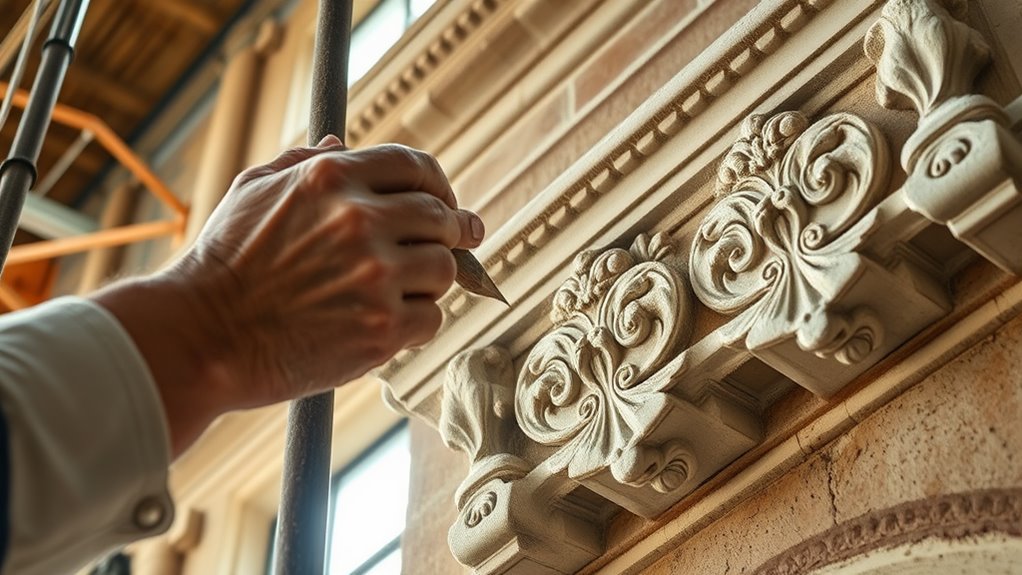
In the domain of plaster restoration, preservation and maintenance play a crucial role in ensuring the longevity and integrity of historic plasterwork. To effectively preserve plaster types, you should conduct thorough condition surveys to identify any damage early. This proactive approach allows you to stabilize deteriorating plaster promptly, using consolidants that maintain structural integrity.
Regular inspections are essential, with a maintenance frequency tailored to the specific environment and usage of the building.
Implementing preventive measures is equally important. Address water leaks and humidity issues immediately, as they can lead to extensive damage over time. You should also apply protective wax coatings periodically, ensuring that they offer ongoing protection while allowing the plaster to breathe.
When redecorating, opt for breathable paints to avoid trapping moisture, and reassess the need for resealing every few years based on wear and tear.
Cleaning is another crucial aspect; use a soft brush to maintain the original finish without damaging the plaster.
Additionally, selecting a reliable plaster repair company with expertise in both traditional and modern plastering techniques can significantly enhance the preservation process.
Selecting Appropriate Materials
Preservation efforts naturally lead to the important decision of selecting appropriate materials for plaster restoration. The choice of materials greatly impacts both the durability and authenticity of the restoration project. You should consider the original composition of historic plaster, typically made from a mixture of lime, gypsum, sand, and animal hair. Understanding material characteristics will guide your selection process.
- Use lime plaster for a softer, more breathable finish.
- Opt for gypsum plaster if you need a faster setting and harder surface.
- Source traditional aggregates like clean river sand for base coats.
- Avoid modern materials that could alter the building's historical value.
- Verify materials come from reputable suppliers for consistent quality.
When choosing plaster for outdoor applications, consider the importance of \water resistance and select materials that can withstand various weather conditions.
Employing sourcing strategies that prioritize high-quality, traditional materials not only preserves the building's character but also adheres to historical accuracy.
Importance of Historical Context

Why is understanding historical context crucial in plaster restoration? When you restore a building, grasping its historical significance is essential to maintain its original character and authenticity. Engaging in detailed archival research allows you to uncover the original materials and techniques used during construction, guaranteeing that any restoration work respects the building's cultural significance.
Investigating historical records gives you valuable insights into the past, which guides your informed restoration decisions. To uphold architectural integrity, you must employ authentic restoration techniques that align with the building's historical context. Identifying original plaster compositions through historical documents and architectural drawings enables you to select materials that reflect the original craftsmanship.
Non-destructive testing methods, like infrared thermography, assure you assess plaster condition without compromising the structure's integrity. Incorporating paint analysis and moisture readings further enhances your understanding of the building's original aesthetics and underlying issues.
Ultimately, a systematic approach to restoration, grounded in historical context, not only preserves the physical structure but also honors the cultural heritage it represents, guaranteeing that future generations appreciate its significance.
Long-term Care Strategies
Effective long-term care strategies are essential for guaranteeing the longevity and integrity of restored plaster in historic buildings.
To maintain your plaster's condition, you need to implement a proactive approach that includes regular monitoring and maintenance.
Here are key strategies to take into account:
- Conduct regular inspections: Schedule frequent checks to identify any early signs of deterioration.
- Monitor humidity: Control moisture levels to prevent damage caused by dampness or mold.
- Address water issues: Fix leaks promptly to minimize the risk of plaster degradation.
- Use compatible materials: Guarantee repairs are made with materials that match the original plaster's composition.
- Apply protective coatings: Take into account sealants to shield against environmental factors that could harm the plaster.
Using moisture-resistant plasterboard, such as water-resistant plasterboard, can be an effective method to prevent dampness and prolong the life of your plaster.
Frequently Asked Questions
What Is the Cost of Plaster Restoration in Nottingham?
The cost of plaster restoration in Nottingham varies based on plaster types and restoration techniques. You'll need to take into account factors like size, complexity, and any special materials, which can greatly influence your overall expenses.
How Long Does the Plaster Restoration Process Typically Take?
The plaster restoration process typically takes several days to weeks, depending on plaster drying times and chosen restoration techniques. Factors like humidity, thickness, and layering markedly influence how quickly you can complete the restoration effectively.
Can I Restore Plaster in a Damp Environment?
In damp conditions, you can restore plaster effectively by employing specialized restoration techniques. Focus on stabilizing moisture, using lime-based plasters, and ensuring proper ventilation to maintain the integrity and longevity of your work.
What Tools Are Essential for DIY Plaster Restoration?
For DIY plaster restoration, you'll need essential restoration tools like chisels, trowels, and floats. Mastering plastering techniques guarantees a smooth finish, while safety gear like goggles and dust masks protects you during the process.
Are There Any Grants Available for Historic Plaster Restoration?
Yes, there are grants available for historic plaster restoration. You can explore funding sources like the Heritage Action Zone and Conservation Area Grants, which require a grant application showcasing public benefit and historical integrity.
Conclusion
In conclusion, restoring historic plaster in Nottingham isn't just about aesthetics; it's about preserving a piece of history. Did you know that over 70% of historic buildings in the UK face deterioration due to moisture issues? By following best practices and engaging skilled professionals, you can guarantee the longevity and authenticity of these structures. Remember, your commitment to restoration today safeguards the architectural heritage for future generations to appreciate and enjoy.

When it comes to choosing the right plasterboard for your bathroom, there's a lot to consider. A recent survey from Read more

Have you ever wondered why plastering is so expensive? It can be a daunting task to tackle on your own, Read more

Painting directly onto plaster can be a daunting task, especially if you are not familiar with the process. While plaster Read more