

Yes, rendering can improve your house’s insulation, but it primarily serves as a coat for exterior walls, enhancing durability and aesthetic appeal. Materials like acrylic and insulated render systems incorporate layers that considerably reduce thermal bridging and provide a barrier against heat transfer. For ideal thermal performance, combining rendering with materials such as expanded polystyrene or mineral wool is advisable. However, the effectiveness of rendering in insulating your house greatly depends on the material used and its compatibility with existing insulation. Exploring different materials and systems could further elevate your home’s energy efficiency and comfort levels.
Understanding Rendering Basics
Before you apply render to your house, it’s important to understand what rendering is: a technique used to coat exterior walls with a protective and decorative layer of plaster.
This process not only enhances the durability of your building but also greatly impacts its aesthetic appeal. As you explore deeper into rendering techniques, you’ll find that the choice of technique can dictate the finish and longevity of the render.
One common method is called sand and cement rendering, where a mixture of sand, cement, and lime is applied. This technique is favored for its robustness and can be finished with different textures to align with aesthetic considerations.
Another popular method is acrylic rendering, which involves using a pre-mixed layer of acrylic resins and sand. This type offers greater flexibility and water resistance, making it suitable for a variety of climates.
From a design perspective, the decision between a smooth or textured finish is vital. Textured finishes can hide imperfections and fit well with rustic styles, while smooth finishes work best with modern aesthetics, offering a sleek and clean look.
Each choice you make in rendering techniques should align with both the functional needs and aesthetic desires of your home.
Materials Used in Rendering
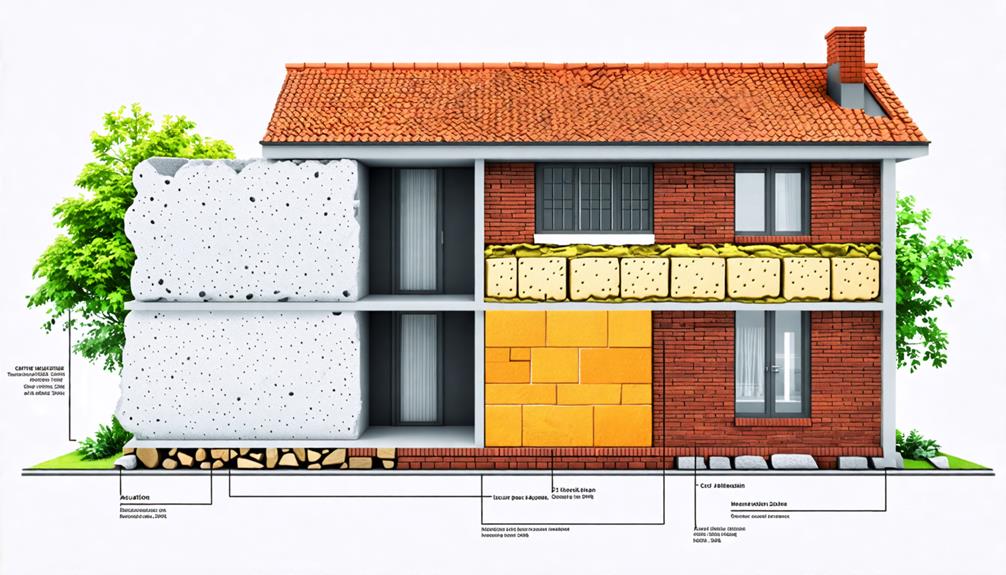
To achieve ideal results in rendering, you must carefully select materials that suit both the structural demands and aesthetic preferences of your home. The choice of rendering materials isn’t just about the visual impact; it’s also about compatibility with your existing structure and the specific insulation types that can enhance your home’s energy efficiency.
When you explore the options, you’ll discover several materials commonly used in rendering:
- Cement: Known for its durability and versatility, cement rendering can be applied to most types of wall surfaces. It adheres well and can be colored or textured for enhanced aesthetics.
- Lime: This material is particularly suitable for older buildings as it offers flexibility that prevents cracks. Lime has a natural breathability which aids in regulating moisture levels within walls.
Each material interacts differently with various insulation types, impacting the overall thermal regulation of your home. Understanding these interactions helps you make an informed decision that aligns with both practical needs and stylistic desires.
Rendering and Thermal Performance
Understanding how different rendering materials affect insulation will greatly influence your home’s thermal performance. When you’re considering rendering, it’s important to analyze how the chosen materials can enhance energy efficiency by reducing heat loss. Some materials offer better insulation properties, leading to less thermal bridging—where heat passes through the colder parts of the external wall, typically at junctions and gaps.
For instance, insulated render systems incorporate an insulation layer beneath the render. This design not only elevates the external wall’s temperature but also drastically cuts down on thermal bridging, enhancing your home’s overall thermal envelope.
By selecting high-performance rendering materials, you’re effectively adding a barrier against heat transfer, which improves energy use and contributes to a more stable indoor climate.
You’ll find that materials like expanded polystyrene or mineral wool, when integrated into render systems, offer superior insulation compared to traditional rendering. These materials are designed to address the conductivity of heat through walls, thereby playing a significant role in preventing energy leakage.
Prioritizing these materials in your rendering choices guarantees that your home isn’t just aesthetically pleasing but also functionally superior in maintaining desirable temperatures and reducing heating and cooling costs.
Comparing Costs and Benefits

Evaluating the costs and benefits of different rendering materials guarantees you make a cost-effective choice that doesn’t compromise on thermal efficiency.
When conducting a cost analysis, you’ll need to take into account not only the initial expenses but also the long-term savings associated with improved insulation. A detailed benefit evaluation helps in understanding the performance enhancements that each type of rendering material offers.
To make your decision-making process easier, here are some key points to take into account:
- Material Costs: Different materials come with varied price tags. For instance, acrylic renders are generally more expensive than traditional cement renders, but they offer better waterproofing and flexibility.
- Durability and Maintenance: Some materials, like silicone renders, though costlier, require less maintenance over their lifespan. This can translate to lower overall costs in the long run.
It’s essential to balance these factors against your specific needs and the climatic conditions of your area.
Thoroughly analyzing these aspects guarantees that the rendering solution you choose isn’t only cost-effective but also enhances your home’s thermal performance for years to come.
Real Homeowner Experiences

Drawing from real homeowner experiences, you’ll find that practical insights can greatly influence your choice of rendering materials. The effectiveness of different rendering types in insulating homes is a hot topic among homeowners. Here’s a detailed look at some homeowner testimonials focusing on insulation effectiveness.
| Homeowner | Rendering Material | Insulation Feedback |
|---|---|---|
| John D. | Acrylic | ‘Notably reduced my heating costs, impressive insulation properties.’ |
| Lisa M. | Mineral | ‘Great for moisture control but mediocre insulation.’ |
| Alex R. | Silicone | ‘Excellent in weather resistance and good thermal insulation.’ |
| Erin S. | Cement | ‘Durable, but not the best for insulation alone.’ |
From these testimonials, you can analyze that while some materials like acrylic and silicone provide better insulation, others might require supplemental insulation strategies. The choice of rendering can be essential in enhancing your home’s thermal efficiency. It’s clear that homeowners value materials that not only enhance the aesthetic appeal but also contribute considerably to reducing energy consumption through improved insulation. You’ll need to weigh these factors based on your specific climatic conditions and house design. Analyzing these firsthand accounts helps in making a scientifically informed decision that aligns with both your aesthetic and functional needs.
Alternative Insulation Options
While rendering can greatly enhance insulation, you should also consider other options like foam board or fiberglass to further boost your home’s energy efficiency.
Diverse insulation materials offer various benefits, tailored to different needs and structural considerations of your house. Let’s explore deeper into some effective alternatives:
- Spray Foam Insulation: This option provides excellent air sealing properties, which can greatly reduce energy costs. When applied, spray foam expands to fill cavities and voids, creating a tight thermal envelope around your home. Its high R-value per inch allows for superior thermal resistance, particularly useful in limiting heat transfer.
- Fiberglass Insulation: Commonly found in batts and rolls, fiberglass is made from fine glass fibers and is particularly effective in attics and walls. It’s inexpensive compared to other forms of insulation and relatively easy to install if you’re looking for a DIY project. However, it requires careful handling to avoid irritation of skin and lungs.
Considering these options, you’ll find each has unique properties that could be ideal depending on your home’s specific requirements and your personal preferences for materials and installation processes.

When it comes to choosing the right plasterboard for your bathroom, there's a lot to consider. A recent survey from Read more

Have you ever wondered why plastering is so expensive? It can be a daunting task to tackle on your own, Read more

Painting directly onto plaster can be a daunting task, especially if you are not familiar with the process. While plaster Read more